Huzzler
Huzzler is a reviewed startup directory that helps founders list their product, get a dofollow backlink, and gain visibility.
Overview
Huzzler is a curated startup directory that positions itself as a launchpad for early-stage products. The platform combines traditional directory listings with an active founder community and a manually verified deals section. Its core promise is simple: founders list their product, get recommended on a high-authority domain, and gain access to a network of other builders. The site claims a Domain Rating of 60 or higher and more than five thousand monthly visits, which makes the dofollow backlink an attractive proposition for startups looking to improve their own search engine visibility.
The startup directory space is crowded. Sites like Product Hunt, BetaList, and Uneed have been around for years, and new aggregators appear every month. Huzzler differentiates itself by focusing on the SEO value of each listing. Unlike many competitors that use nofollow links for outbound URLs, Huzzler provides a followed backlink from its domain. For a startup with a low domain authority, a handful of these links can move the needle in search rankings. Additionally, the site manually reviews every submission and uses phone verification for accounts, which keeps the quality of listings high and reduces spam. The breadth of the offering is visible on the startup directory page, where hundreds of products are organized by niche.
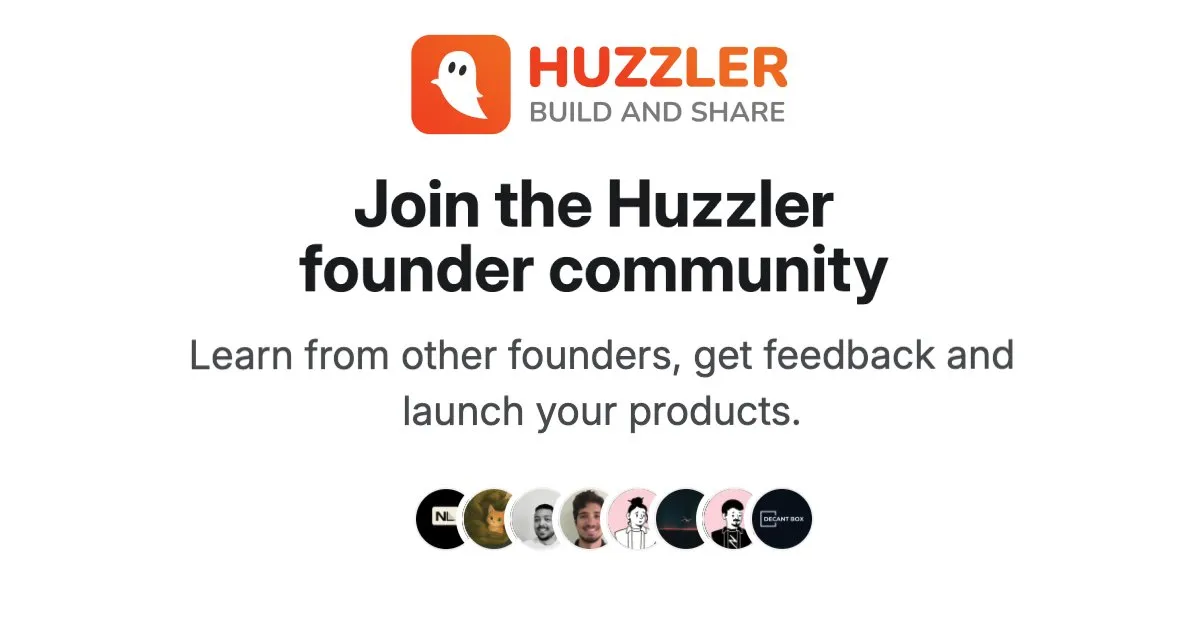
Beyond the backlink, Huzzler functions as a community. The homepage displays member avatars and reports that more than 4,400 founders have joined. This social proof encourages new users to trust the platform. The site also hosts an awards program and a section for verified deals, which gives returning visitors reasons to come back. The verified deals section features discounted tools like Cursor, Tally, and beehiiv, with each deal checked manually to confirm it still works. These touches make Huzzler feel more like a startup ecosystem than a simple directory.
Key Features
Reviewed Startup Directory
Huzzler's core feature is its directory. Every product listing goes through a human review before publication. The team evaluates whether the submission is a real product or spam. Phone verification is required for account creation, which adds friction but ensures that users are genuine. This process is a clear signal that the platform values quality over quantity. For founders, this means a listing on Huzzler does not get lost in a sea of low-effort entries. The directory's categories are also well organized, with more than 40 options ranging from artificial intelligence to travel and geography.
High Authority Dofollow Backlink
The primary reason most founders list on Huzzler is the backlink. The site explicitly mentions that it offers a DR 60+ dofollow link. In the world of search engine optimization, a dofollow link from a domain with that authority is meaningful. It passes link equity and can boost a startup's own domain rating over time. The fact that the link is followed differentiates Huzzler from many other directories that use nofollow attributes. Even with the platform's relatively modest traffic of around 5,000 monthly visits, the link itself carries weight because search engines treat it as an editorial endorsement.
Category Based Discovery
Startups can be listed under a specific category. The site has a variety of niches that reflect common startup verticals. For example, there are categories for business, productivity, artificial intelligence, developer tools, education, and even ecommerce. Each category page shows the number of listings, providing insight into the competition. A new product in a less crowded category, such as music or audio, might stand out more easily. Category pages are also indexed by search engines, so a listing helps with both direct navigation and long-tail search visibility.
Featured and Boosted Placement
To increase visibility, Huzzler offers paid placement options. Featured startups appear on the homepage in the featured section, while boosted listings are shown in the recently boosted block. These placements are likely to generate more clicks than a regular listing buried in a category page. The pricing is not displayed until a user creates a listing, but the site suggests that paid options follow a set of rules. For a startup with a marketing budget, paying for a featured slot might be worth the burst of traffic and the association with a curated directory.
Verified Deals Section
Huzzler does not only list startups; it also curates promotional codes and referral deals for developer tools and SaaS products. The deals are checked by the team, and each deal page includes the date of verification. This section adds utility for founders who can save money on tools they already use. It also creates a reason for the directory to attract repeat visitors. For example, the site recently listed a deal for Tally that offers 50% off for three months, and a beehiiv deal that includes a 14-day trial plus 20% off for three months. These are real, usable offers that are confirmed manually.
Community and Social Proof
The platform emphasizes its community aspect. The homepage shows a grid of avatars and a counter that reads "Trusted by 4,421+ founders" although this number may fluctuate as new members join. This social proof is important for a new platform because it helps build credibility. The presence of the Huzzler Awards also suggests that the community is active and that there is a competitive element. Founders can discover other products, which might lead to collaborations, feedback, or simply networking. The combination of directory, deals, and community creates a more engaging experience than a static list of links.
A Transparent Submission Flow
From a user experience perspective, Huzzler keeps things simple. There is a clear call to action to launch on the platform. The front page is uncluttered, with sections for featured startups, deals, and recently boosted products. This focus on clarity helps first-time visitors understand the value proposition within seconds.
How It Works
The process of getting a listing live is straightforward but includes a review step. Here is how it works.
First, a founder creates an account. The site supports registration via email or Google OAuth. During registration, the user must provide a name, a unique username, an email address, and a password. The platform also uses phone verification to confirm that the account is tied to a real person. While this requirement may be off-putting for some users, it dramatically reduces spam submissions and fake accounts.
Once inside, the founder can create a listing. This typically involves adding a product name, a description, a URL, and a representative image. The user also selects the most fitting category from the list. The team then manually reviews the submission. This review can take a few days, though the exact time is not documented on the homepage. If the submission passes, it becomes publicly visible on the site.
After publication, the founder can share the listing link on social media or include it in a press kit. The listing appears in the chosen category and may also show up in the site's internal search. The dofollow backlink is present from the moment the listing goes live, so the SEO benefit begins immediately.
For those who want more exposure, Huzzler provides additional options. After a listing is created, the publication screen shows what is available in terms of featured or boosted placements. These are paid upgrades that put the product in front of more eyes. The homepage has a "Recently Boosted" section and a "Featured Startups" section, both of which are prime real estate.
Finally, users can explore other parts of the platform. The deals section lists verified promo codes, and the community features allow founders to interact. While Huzzler does not have a built-in messaging system or forum, the directory itself serves as a way to discover peers.
Use Cases
The real question is how founders can benefit from Huzzler. The following scenarios illustrate its practical value.
Scenario One: An Indie Hacker with a Side Project
A solo developer builds a small SaaS for managing personal finances. With a limited budget, they need backlinks and a little visibility. They list on Huzzler for free, get a dofollow link from a DR 60+ domain, and receive a small but consistent flow of referral traffic. The listing also appears on category pages for finance and productivity. Over a few months, the backlink contributes to a gradual improvement in the project's search rankings.
Scenario Two: A Startup Seeking SEO Growth
A B2B startup that sells a customer feedback tool has an active blog. Its domain authority is low, which makes ranking for competitive keywords difficult. The team adds Huzzler as part of a broader link-building effort. The dofollow link from huzzler.so passes link equity, and the category page for "analytics" provides a relevant anchor. After a few more similar links, the site begins to rank for lower-competition terms. The startup tracks its backlink profile and sees Huzzler as a valuable piece.
Scenario Three: A Developer Tool Wanting a Fast Start
A developer tool for mocking APIs launches in beta. The founders want to reach developers quickly. They list in the developer tools category, where there are around 300 other listings. The visibility helps attract early signups. The tool also appears in the recently boosted section if they pay for a boost, which gives a temporary spike in traffic. The team can also browse the deals section to find discounted services for their own operations.
Scenario Four: A Founder Who Wants to Save Money
A founder uses email marketing software and project management tools. They check the Huzzler deals page to see if there are any active promo codes. They find a beehiiv deal that gives them 20% off a newsletter subscription. They also discover a Tally form builder discount. Over a year, these savings more than offset any costs associated with using Huzzler. The deals are verified manually, so there is less risk of broken links.
Scenario Five: A Community Builder
A founder is interested in finding other products that complement their own. By browsing categories, they find a startup in the CRM space that could be a potential integration partner. They reach out via the listed website and begin a collaboration. The social proof of 4,400+ founders gives them confidence that the directory contains serious projects.
Pricing & Value
Huzzler does not publish a detailed pricing page on the homepage. Based on the available content, the basic listing is free. The value proposition hinges on the dofollow backlink, which has a real cost in the current SEO landscape. Buying a link from a blog can cost hundreds of dollars, and directories that offer dofollow links are rare. Huzzler's free listing is therefore a valuable asset for any startup at an early stage.
The paid options for featured and boosted placements are not explicitly priced in the public-facing HTML. They are described as available after a listing is created. It is likely that the pricing is presented once a founder is logged in and submitting a product. The cost likely depends on the type of placement and the duration. For a startup with a small marketing budget, a one-time feature might be an experiment. The homepage's featured section is prominent, and a spot there could drive a few hundred visitors, which might justify the price.
The About page gives more context on the platform's mission, but it does not reveal specific pricing either. The deals section is free for users to browse. For companies, submitting a deal offers exposure to a community of founders. This is a mutually beneficial arrangement. The verification process adds a level of trust that other deal sites do not provide.
The overall value is strong for the free tier. Even if a startup never pays for placement, the backlink alone is worth the time spent creating a listing. The paid options are likely to be more affordable than traditional advertising and can be measured by the traffic they bring.
Final Verdict
Huzzler is a promising startup directory that understands what founders need. The combination of a manually reviewed directory, a verified deals section, and the promise of a high-authority dofollow backlink makes it a useful resource. The site is transparent about its review process and its community metrics. The user experience is clean and direct.
There are some limitations. The platform is still in a growth phase. The traffic of 5,000 monthly visits is modest, and the domain's authority, while strong, is not in the same league as giants like Product Hunt. The paid placements are not transparently priced, which could be confusing. Phone verification during signup might deter some visitors who prefer a frictionless process.
However, for founders who are comfortable with a curated directory and who value the SEO benefits, Huzzler is a legitimate option. It is particularly attractive for early-stage projects that cannot afford expensive link building. The deals section adds ongoing value, and the community features are a nice bonus. As the directory grows, its authority and visibility are likely to increase, which would make the backlink even more valuable.
Pros & Cons
The Good
- Offers a dofollow backlink from a domain with DR 60+ and 5,000+ monthly visits, which is rare in startup directories.
- Manual review and phone verification ensure high-quality, spam-free listings.
- Free listing option makes it accessible to early-stage startups with minimal budget.
- Unique verified deals section adds practical value beyond directory listings.
- Clean, organized category structure with over 40 niches helps targeted discovery.
The Bad
- Limited traffic (around 5,000 monthly visits) and a relatively new domain mean the immediate referral traffic is modest.
- Pricing for featured and boosted placements is not transparently listed on the public site.
- Phone verification during signup may create friction and reduce sign-up conversion for some users.