SEOLint
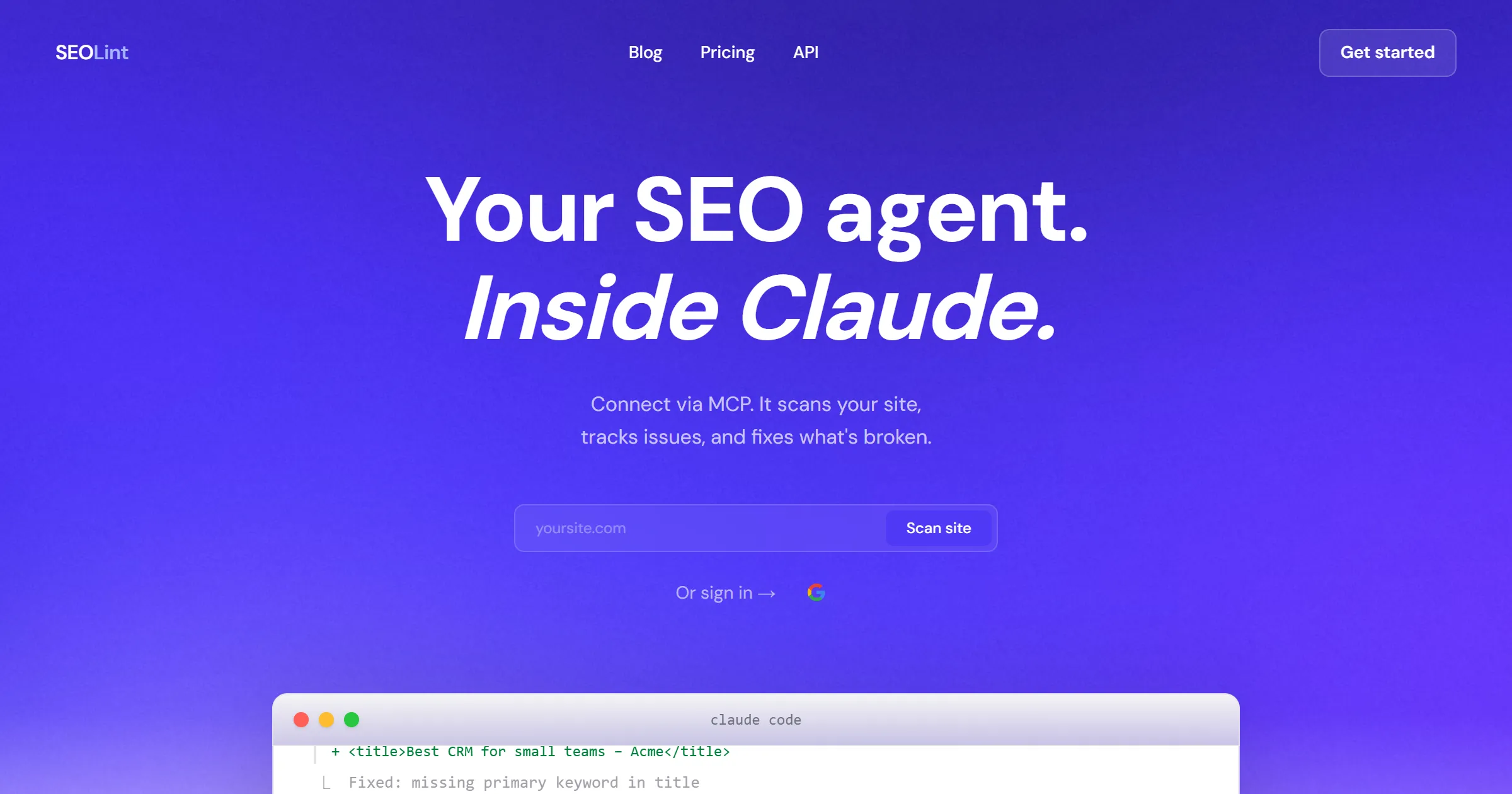
SEOLint is an AI-powered SEO agent that integrates with Claude to scan websites, track issues, and provide actionable fix prompts for developers and marketers.
Overview
SEOLint is an AI-powered SEO monitoring tool designed specifically for developers and technical marketers. The product integrates directly with Claude through the Model Context Protocol (MCP), transforming the AI assistant into a specialized SEO agent. SEOLint addresses the common challenge of identifying and fixing technical SEO issues that often require specialized knowledge and manual effort. By scanning websites, tracking issues across multiple scans, and providing AI-ready fix prompts, SEOLint enables users to maintain optimal SEO performance without deep expertise in search engine optimization. The tool targets developers, technical marketers, and teams building websites who need to ensure their sites meet SEO best practices while minimizing time spent on manual audits and fixes.
Key Features
AI-Powered SEO Scanning scans websites comprehensively, checking for over 40 different issues across SEO, performance, accessibility, and AEO (AI Engine Optimization). Unlike generic reports, SEOLint extracts actual broken HTML elements from pages and provides specific, actionable insights rather than vague warnings. The scanning process is automated and can be triggered through various interfaces including the web dashboard, CLI tools, and direct integration with Claude conversations.
Memory and Issue Tracking builds a persistent understanding of each website over time. The system labels issues as NEW, PERSISTING, or REGRESSED across every scan, providing valuable context about whether problems are being resolved or worsening. This memory feature creates a site profile that includes inferred goals, target audience, and niche information, allowing for more intelligent recommendations and context-aware fixes.
AI-Ready Fix Prompts provide specific, copy-paste instructions designed for Claude Code and Cursor. Each identified issue includes the actual broken HTML element and a precise prompt that users can paste directly into Claude to edit the problematic code. This eliminates the need for SEO knowledge, as the AI handles both diagnosis and remediation with minimal user intervention.
MCP Server Integration enables seamless interaction between Claude and SEOLint through the Model Context Protocol. Users can add SEOLint as an MCP server, giving Claude access to eight specialized tools including scan, history, site intelligence, page suggestions, and resolve functions. This integration works across Claude Code, Claude Desktop, and custom AI agents, allowing SEO management directly within existing workflows.
Content Gap Analysis identifies missing pages and opportunities based on the site's existing structure and inferred goals. The system analyzes sitemaps and suggests new page ideas with complete briefs, including both informational and commercial content opportunities. These suggestions come with insights about why certain pages might be valuable based on the site's existing content and competitive landscape.
GitHub Actions Integration allows teams to fail builds when previously fixed SEO issues regress. This feature provides automated quality control for development pipelines, ensuring that SEO improvements remain intact through code changes and deployments. The integration supports continuous monitoring and enforcement of SEO standards within CI/CD workflows.
Site Intelligence Dashboard provides visual tracking of SEO performance over time with charts showing improvement trends. The dashboard displays key metrics including scan history, tracked days, URLs in sitemap, and issue status evolution. Users can quickly assess whether their site is improving, identify critical issues, and track resolution progress across multiple scans.
How It Works
Users begin by connecting SEOLint to Claude through the Model Context Protocol, a process that takes approximately two minutes according to the website. Once connected, users can initiate website scans through multiple interfaces: directly from the web dashboard by entering a domain, via command line interface tools, or by asking Claude to scan a site during any conversation. The system performs comprehensive scans that examine over 40 different SEO, performance, accessibility, and AEO factors. Each identified issue is documented with the actual broken HTML element, a clear description of the problem, and an AI-ready fix prompt designed specifically for Claude. The system maintains memory of all previous scans, allowing it to track whether issues are new, persisting, or regressed. Users can then paste the provided fix prompts into Claude, which will edit the appropriate files to resolve the issues. The platform also provides ongoing monitoring through GitHub Actions integration and regular automated scans, ensuring that SEO improvements remain stable over time.
Use Cases
A solo developer launching a new SaaS product needs to ensure their landing pages and documentation meet SEO best practices but lacks specialized SEO knowledge. By integrating SEOLint with Claude, they can scan their site, receive specific fix prompts for issues like missing primary keywords in title tags or broken meta descriptions, and have Claude implement the fixes directly in their codebase, saving hours of research and manual editing.
A marketing team at a mid-size digital agency managing SEO for multiple client websites needs to maintain consistent quality across all properties. Using SEOLint's memory feature, they can track which issues persist across scans for each client, prioritize critical problems, and leverage the content gap analysis to suggest new pages that align with each client's business goals and competitive landscape.
A development team implementing continuous integration wants to prevent SEO regressions in their production deployments. By integrating SEOLint's GitHub Actions, they can automatically fail builds when previously fixed SEO issues reappear, ensuring that SEO improvements remain intact through code changes and minimizing the risk of accidental performance degradation.
An e-commerce company with a large product catalog needs to identify and fix technical SEO issues that might be affecting their search visibility. SEOLint's comprehensive scanning covers critical e-commerce elements like product schema, image optimization, and page speed, while the AI fix prompts allow their development team to quickly implement corrections without requiring specialized SEO training.
Who It's For
SEOLint targets developers, technical marketers, and teams building websites who need to maintain SEO quality without deep expertise in search engine optimization. The tool is particularly valuable for solo founders, small to mid-size development teams, digital agencies managing multiple client sites, and e-commerce businesses with technical teams. Compared to traditional SEO tools like Ahrefs or Screaming Frog that provide diagnostic reports requiring manual interpretation and implementation, SEOLint differentiates itself by providing direct, actionable fix prompts and seamless integration with AI assistants. The product also stands apart from basic SEO checkers by offering persistent memory across scans and integration with development workflows through GitHub Actions and MCP protocols.