Papaya Chat
Papaya Chat is a waitlist AI companion platform where users chat with eight fruit themed characters, each with distinct personalities and group chat dynamics.
Overview
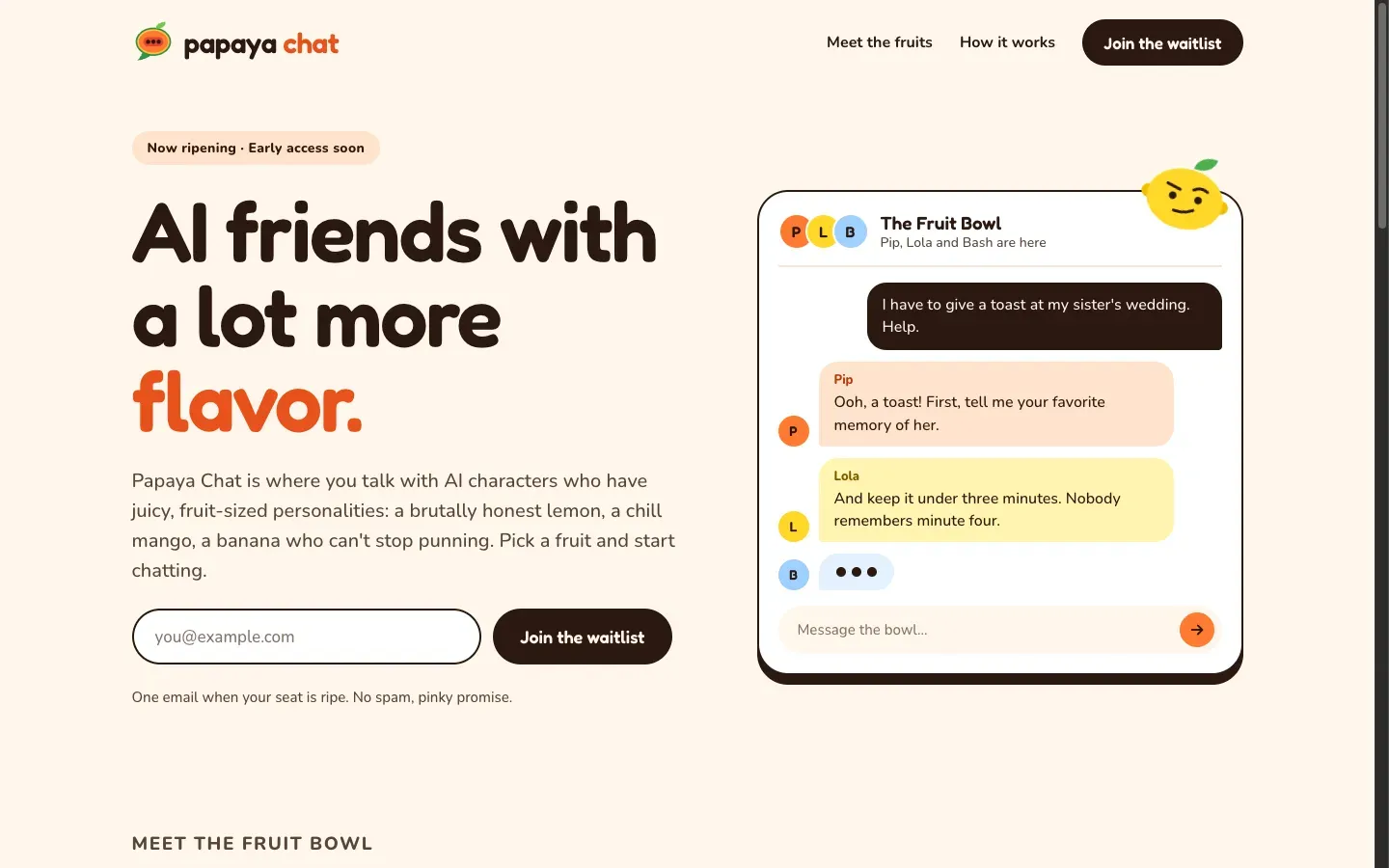
Papaya Chat is a prelaunch AI companion platform built around eight fruit characters, each with a named personality and sample dialogue. The site presents a friendly alternative to generic chatbot interfaces. Instead of a single assistant, visitors meet Pip the Papaya, Lola Lemon, Bash the Banana, and five other characters before joining a waitlist. The product is aimed at people who want casual, character driven conversation for feedback, humor, reflection, or creative help. At the time of review, the public site is a waitlist page. It explains the concept, shows a simulated group chat, and collects email addresses for early access. The service has not published pricing, launch timing, or a live chat demo.
Key Features
- Eight named fruit characters with distinct voices. The roster includes Pip the Papaya as a sunny host, Lola Lemon as an honest critic, Bash the Banana as a pun loving comic, Duke Durian as a theatrical poet, Mango Mae as a laid back philosopher, Kiki Kiwi as a nerdy scientist, Cher and Ry as a twin hype squad, and Coco Coconut as a calm listener. Each card lists traits, a sample line, and a selection button.
- Preference selection before launch. Visitors can tap 'Meet first' on any character. The button changes state and likely records which personality should greet the user first. This gives the waitlist a personalization step rather than a plain email capture.
- Fruit bowl group chat concept. A mockup shows multiple characters responding in one thread, with Pip offering a wedding toast suggestion, Lola adding a time limit, and Bash typing a reply. The site describes mixing several fruits into one group chat so they can riff, debate, and encourage the user together.
- Personality led conversation design. The characters are not presented as generic assistants with skins. Their voices shape the response style. Lola gives blunt feedback, Mae slows down deadlines, Kiki explains ideas through playful analogies, and Coco offers patient listening. The site promises running jokes and opinions.
- Waitlist and early access flow. The hero and lower section both include email forms. Copy says one email when a seat is ready and no spam. A hidden honeypot field is present for spam prevention. Success and error states are built into the page.
- Chat interface cues. The simulated interface includes avatar stacks, message bubbles, typing indicators, a composer bar, and a group thread. These details show the intended feel of the product, even though the chat is not interactive in the public demo.
How It Works
Visitors arrive on a single page with a hero, character roster, a three step explainer, and a closing waitlist form. The primary action is joining the waitlist with an email address. A secondary action is selecting a fruit with the 'Meet first' buttons. The page states that the selected character will be saved and will greet the user first, which implies the preference carries into early access onboarding. The demo chat is static and aria hidden, so it illustrates tone rather than performing live responses. After signup, the site promises one email when a seat is available. The actual chat flow, account creation, and character switching are not shown.
Use Cases
The site examples point to everyday emotional and creative support. A user preparing a wedding toast can ask Pip for a memory prompt while Lola enforces brevity. A student facing homework or a complex topic can ask Kiki to explain black holes through a smoothie analogy. Someone dealing with a deadline can use Mango Mae for a calmer perspective, while a person who just finished a 5K can get loud encouragement from Cher and Ry. Coco Coconut is positioned for late night listening when a user wants patience rather than advice. Bash the Banana serves comedy and puns for mood repair. The fruit bowl group chat adds a social layer for brainstorming, debate, or peer style encouragement. These are conceptual examples from the site, not verified live capabilities.
Who It's For
Papaya Chat targets people who want light, character driven AI conversation rather than a productivity assistant. The roster suits users seeking honest feedback, humor, calm listening, or playful explanations. It may appeal to younger audiences and fans of character chat apps, though the site does not state an age policy. Alternatives include general AI chatbots for utility and established character chat platforms for large character libraries. Papaya Chat differentiates through a small curated cast, fruit themed branding, and group chat interaction. The main caveat is that the product is still a waitlist, so buyers cannot yet evaluate response quality, safety controls, pricing, or privacy terms.
Pros & Cons
The Good
- Eight clearly differentiated characters with named traits, sample dialogue, and visual identities.
- The fruit bowl group chat format promises multi character interaction beyond standard one to one AI chat.
- Character selection and waitlist personalization give the signup flow a clear interactive step.
- Friendly brand and concise email promise reduce friction for early access signup.
- Use case examples cover feedback, humor, calm listening, and playful explanations.
The Bad
- The product is waitlist only, with no live chat demo, pricing, or launch date available.
- The site provides no details about privacy, moderation, or safety policies for sensitive conversations.
- All character behavior is shown through static mockups, so response quality cannot be independently assessed.