Forgefy
Forgefy converts product updates, reviews and customer conversations into scheduled social posts and email campaigns for SaaS founders.
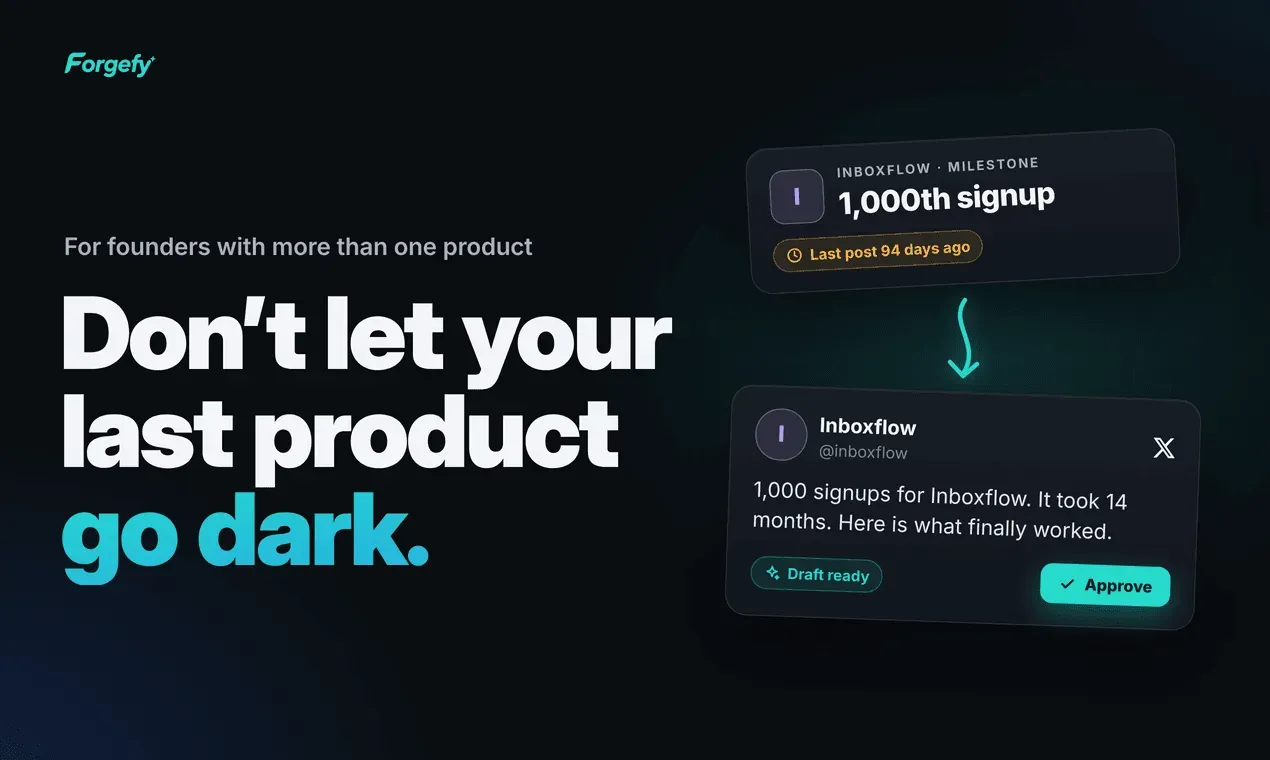
Forgefy is an AI marketing co-pilot aimed at software founders whose shipping cadence outpaces their publishing cadence. The platform collects the raw material a company already produces, including changelogs, feature announcements, customer reviews and support conversations, and rewrites it into finished social posts, email campaigns and visual assets. Its stated goal is continuity. While a founder works on the next release, the products already in market keep attracting attention through scheduled content. Forgefy markets itself as a distribution engine rather than another queue based scheduler, bundling generation, formatting, scheduling and email management into a single dashboard. The typical user is a SaaS founder, indie hacker, small startup team or independent creator operating without a dedicated marketing hire.
Key Features
Product-aware content generation. Rather than relying on blank prompts, Forgefy works from artifacts a company has already created. Changelogs, release notes, review feedback and customer conversations become the source material, so the resulting posts reference shipped functionality instead of abstract marketing themes.
Voice matching. The service generates copy in the founder's own register. Existing published material informs the tone, which reduces the editing work normally required to strip generic AI phrasing out of a draft.
Event-driven automation. A dedicated SaaS marketing automation layer can build posts, choose formats and schedule publication from product and revenue events. A new release, a pricing change or a milestone can therefore produce a content queue without a manual kickoff.
Multi-platform scheduling. Finished posts move into a shared calendar that covers the major social networks. This removes some of the subscription sprawl that accumulates when founders run separate scheduling tools for each channel.
Email campaign management. Social output is not the only deliverable. The dashboard also handles email campaigns, which allows lifecycle messaging and social announcements to draw on the same underlying material.
Template and format libraries. More than a dozen template families ship with the product, covering build in public updates, product launches, growth milestones, contrarian takes, thread starters, LinkedIn posts, Instagram captions, cold outreach, landing page copy and customer stories. Video exports are processed in the browser through FFmpeg WebAssembly, which keeps rendering client side.
Free diagnostic calculators. Five standalone tools, including a content ROI calculator, a weekly time audit, a positioning statement generator, a revenue leak scanner and a content load calculator, let a founder quantify the workload before paying for anything.
Reference libraries. A glossary of SaaS metrics, benchmark data for trial conversion, CAC, ARPU and email performance, founder playbooks, marketing checklists and a tool review section round out the informational side of the site.
How It Works
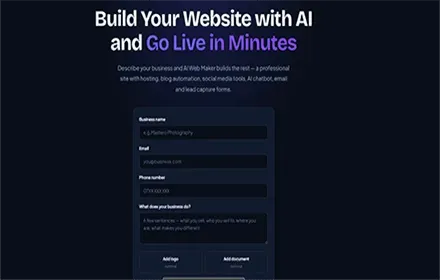
The workflow starts at a free signup page. A founder connects or pastes in the material the business already generates, such as release notes, customer feedback or review text. Forgefy analyses that input, matches it against a stored voice profile and produces a batch of drafts in multiple formats, spanning short social posts, longer threads and email copy. Drafts land in an editing view where the founder makes final adjustments before they enter the scheduling calendar. From that point the automation layer can take over, pushing posts out on a defined cadence and triggering additional content when new product or revenue events occur. Email campaigns follow a similar path, sharing the same source material and the same dashboard. The stated outcome is a publishing rhythm that continues during intense development periods, when founders typically go quiet.
Use Cases
A solo indie hacker shipping incremental improvements every week can feed each change into Forgefy and come away with a fortnight of posts, keeping an audience warm without pausing development to write.
A two person SaaS team with no marketing budget can use the event driven automation to convert a launch or a pricing update into a coordinated push across social and email from one interface.
A founder building in public who already posts progress updates can use the template library to standardise recurring formats, such as milestone announcements and contrarian takes, without rebuilding the same structure each time.
An established founder with several live products can keep older apps visible while attention shifts to a new build, which is the scenario the tagline explicitly targets.
A creator or consultant selling knowledge products can apply the same pipeline to newsletters and outreach sequences, since the email side shares the generation engine.
Teams evaluating spend can run the content ROI and content load calculators first, producing an estimate of hours saved and the dollar value of published content before committing to a paid plan.
Who It Is For
Forgefy targets SaaS founders, indie hackers, startup teams and creators who need consistent distribution but cannot justify a full time marketer. It competes in a crowded field that includes Buffer, Hootsuite, Later and Sprout Social on the scheduling side, and Typefully, Tweet Hunter and Hypefury on the writing side. Forgefy differentiates by tying generation to product events rather than to a blank composer, and its site maintains direct comparison pages against all seven of those rivals. Founders who only need a queue for manually written posts will likely find lighter options sufficient, while those who want output tied to what the product actually shipped are the intended audience.
Pros & Cons
The Good
- Generates content from real product artifacts such as changelogs, reviews and support conversations instead of blank prompts
- Voice matching produces drafts that read closer to a founder's existing published tone, cutting editing time
- Event driven automation can turn a release or revenue milestone into a scheduled pipeline of posts automatically
- Consolidates social scheduling and email campaign management in one dashboard, reducing tool sprawl
- Ships a substantial free layer of calculators, templates, benchmarks and playbooks usable without a subscription
The Bad
- No public pricing is shown on the landing page, so cost comparison against Buffer or Hootsuite requires signing up first
- Feature specifics are scattered across docs, solutions and comparison pages, making the landing page alone an incomplete evaluation
- Only an X account is publicly listed, with no GitHub or LinkedIn presence available for verification of team or roadmap