Matcha
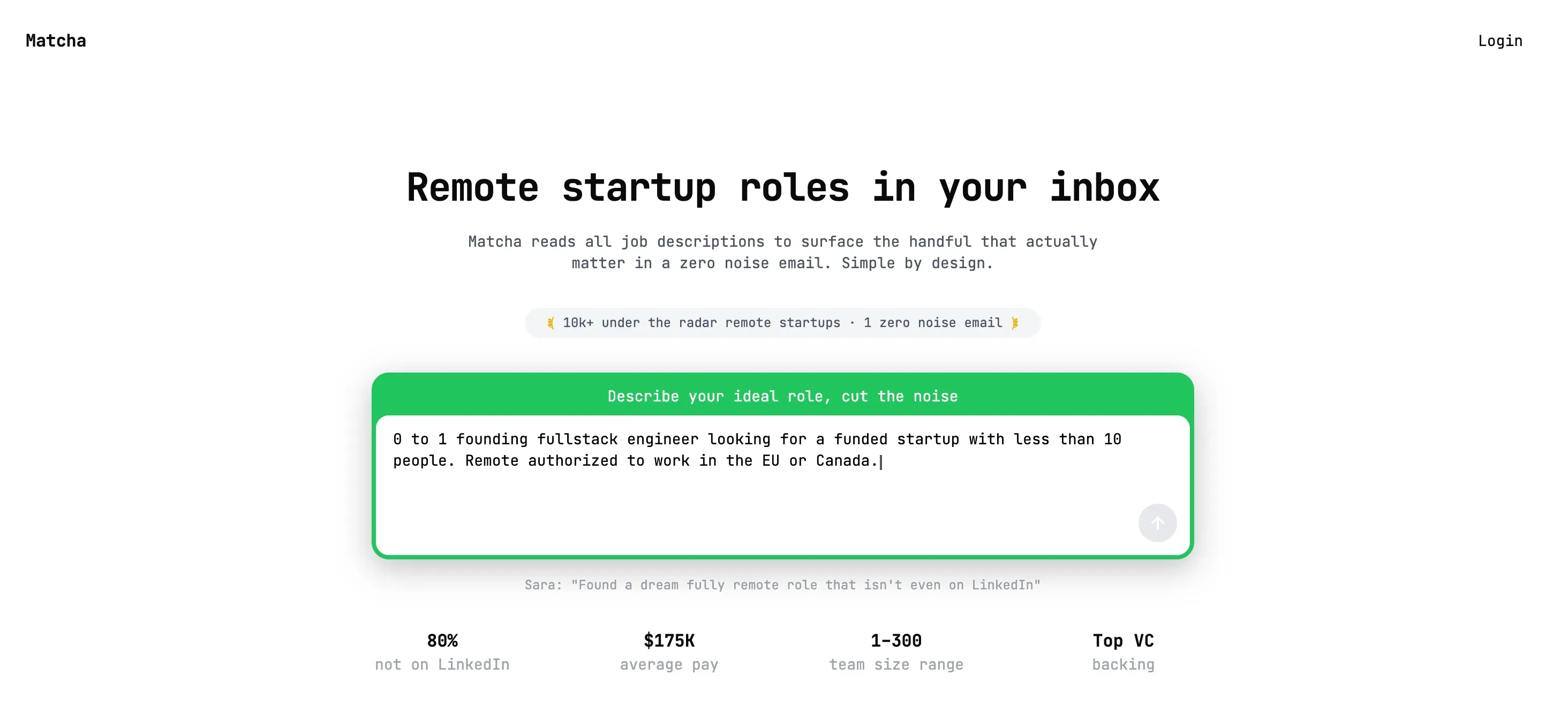
Matcha delivers remote startup job opportunities via a zero-noise email, scanning 10k+ startups daily.
Overview
The remote job market is crowded with platforms that overwhelm users with thousands of listings, making it difficult to find high-quality opportunities. Matcha aims to solve this by acting as a curated filter for remote startup roles. The service scans over 10,000 well-funded, under-the-radar startups daily and surfaces only the most relevant positions in a single, concise email. By focusing on startups backed by top venture capital firms and offering competitive salaries—averaging $175,000—Matcha positions itself as a premium alternative to traditional job boards. The platform emphasizes simplicity: users describe their ideal role, and Matcha handles the rest, delivering a zero-noise experience that saves time and reduces decision fatigue.
Key Features
- Daily Curated Email: Matcha processes job descriptions from more than 10,000 remote startups each day, but users receive only one email containing a handful of roles that match their preferences. This radical filtering eliminates inbox clutter and ensures every listing is worth considering.
- Focus on Well-Funded Startups: The platform prioritizes startups backed by top venture capital firms, meaning users see opportunities at companies with solid financial backing and growth potential. This reduces the risk of joining unstable ventures and increases the likelihood of competitive compensation.
- Average Pay Transparency: Matcha publicly shares an average salary of $175,000 across its listings, giving users a clear benchmark for expected compensation. This transparency helps set realistic expectations and attracts candidates targeting high-paying roles.
- 80% Roles Not on LinkedIn: According to Matcha, four out of five job listings on the platform are not posted on LinkedIn, providing access to a hidden job market. This unique value proposition gives users a competitive edge by surfacing opportunities that most job seekers miss.
- Simple Input Process: Users describe their ideal role in a text area on the homepage, covering skills, industry preferences, and desired responsibilities. This free-form input allows for nuanced matching without rigid dropdowns or forms, making the setup quick and intuitive.
- Team Size Range: Matcha highlights that the startups it features employ between 1 and 300 people, catering to those who prefer small to medium-sized teams. This range appeals to candidates seeking intimate work environments where they can have greater impact.
- VC Backing Indicator: The platform explicitly tags roles from startups with top VC backing, allowing users to prioritize opportunities from well-funded companies. This feature helps candidates assess stability and growth prospects at a glance.
How It Works
Getting started with Matcha is straightforward. Users visit the Matcha jobs page and create an account by providing an email address. The only other input required is a text description of the ideal role—users can write a few sentences about their skills, preferred industry, and responsibilities they seek. Matcha’s algorithm then scans its daily database of remote startup job listings and selects a handful that closely match the description. Each day, subscribers receive a single email containing these curated opportunities, with direct links to apply. The system continuously learns from user behavior, refining future selections based on which roles receive interest. The platform is designed to be passive: once the description is set, users simply check their inbox daily for the update. No browsing, filtering, or multiple tabs required. The entire experience centers on reducing noise and friction, making job hunting a low-effort routine.
Use Cases
- Experienced Software Engineer Seeking High Salary: A senior engineer tired of sorting through thousands of irrelevant listings on LinkedIn uses Matcha to receive only roles at well-funded startups offering salaries around $175,000. Within days, the engineer finds a lead at a Series B company that wasn’t advertised elsewhere.
- Product Manager Exploring Startup Culture: A product manager with enterprise experience wants to transition to a smaller, agile team. Matcha surfaces positions at startups with 50-100 employees, all backed by notable VCs, allowing the manager to focus on companies with proven traction.
- Designer Targeting Remote-First Companies: A UI/UX designer prefers fully remote roles. Matcha’s filtering ensures every listing is remote from startups that are fully distributed. The designer receives a role at a design-forward startup that valued portfolio depth over pedigree.
- Recent Graduate Entering Tech: A new graduate wants to join an early-stage startup to gain broad exposure. Matcha highlights roles at startups with fewer than 20 employees, where the graduate can wear multiple hats and grow quickly. The platform eliminates larger, less suitable employers.
- Job Seeker Tired of LinkedIn Noise: A marketing professional spends hours on job boards but finds most leads irrelevant. After describing a preference for B2B SaaS startups, Matcha sends a daily email with 3-5 highly targeted roles, cutting job search time by 80%.
Pricing & Value
Matcha does not publicly display pricing information on its website, which suggests the service may be free for job seekers during its current phase. The absence of a pricing page or subscription tiers makes it difficult to assess long-term value, but the core offering—daily curated emails—likely relies on a free model to attract users. If the service remains free, the value is exceptional: zero-cost access to a curated list of high-paying, VC-backed startup roles that are largely unavailable elsewhere. For comparison, similar premium job curation services often charge monthly fees. However, the lack of transparency around future pricing could be a concern for users who want stability. If Matcha introduces a paid tier, the value will depend on the cost relative to the quality and exclusivity of listings. Currently, the value proposition is strong, especially for active job seekers who prioritize quality over quantity.
Final Verdict
Matcha succeeds in its core mission: delivering high-quality remote startup roles without overwhelming users. The curated email format, focus on VC-backed companies, and competitive salary transparency are genuine strengths that solve the classic job search paradox of too many choices. The platform’s simplicity—one description, one email—makes it accessible to anyone. However, the lack of pricing information and the narrow niche (only remote startup roles) limit its appeal to a specific audience. Users outside of tech or those seeking non-startup environments will find little value. Additionally, the algorithm’s effectiveness depends on the input description, which may require refinement. Overall, Matcha is a valuable tool for remote workers, startup enthusiasts, and professionals targeting high-growth companies. It is best used as a supplement to broader job boards, not a replacement. For those who fit its niche, it can dramatically streamline the search process and uncover hidden opportunities.
Visit the Matcha homepage to learn more about the service, or explore additional details on Matcha to see how it compares to other job platforms.
Pros & Cons
The Good
- Curates job listings from over 10,000 remote startups daily, saving users hours of manual searching.
- Focuses on well-funded startups backed by top venture capital, increasing the chance of competitive compensation.
- Reports that 80% of its listings are not found on LinkedIn, giving users access to a hidden job market.
- Features an average salary of $175,000, providing transparency and attracting high-caliber candidates.
- Delivers a single, zero-noise email per day, reducing information overload and simplifying the job search process.
The Bad
- No pricing information is provided, leaving users uncertain about future costs or potential premium tiers.
- Limited to remote startup roles only, excluding opportunities in larger companies or non-remote positions.
- The algorithm's effectiveness hinges on the quality of the user's initial description, which may require trial and error.