Soniox
Soniox offers a real-time multilingual speech AI platform with STT, TTS, and translation APIs across 60+ languages.
Overview
Soniox is a real-time multilingual speech AI platform that provides speech-to-text, text-to-speech, and speech translation through a single unified API. The platform is designed for developers and enterprises building voice-enabled products that require low latency, high accuracy, and support for 60+ languages. Unlike many competitors that prioritize English first, Soniox was built from the ground up to handle the complexities of multilingual speech, including code-switching, accents, alphanumerics, and domain-specific vocabulary.
The company offers both a ready-to-use consumer app (Soniox App) for transcription, translation, and dictation, and a developer API for custom integrations. The API supports real-time streaming with sub-200ms latency, making it suitable for live voice agents, wearables, meeting transcription, and call center analytics. Soniox has attracted notable customers including Perplexity, Samsung, LG, Krisp, Fireflies, and Truecaller, indicating strong product-market fit in both enterprise and consumer-facing applications.
Key Features
Real-time Speech-to-Text with Native-Speaker Accuracy
Soniox’s STT engine delivers recognition accuracy across 60+ languages, including challenging scenarios like fast-paced multi-speaker conversations, high-noise environments, and domain-specific vocabulary. The system handles numbers, names, and alphanumeric sequences with precision, which is critical for use cases like medical dictation, call center analytics, and voice agents that need to capture IDs or codes.
Text-to-Speech with Precision and Low Latency
The TTS API generates natural, high-fidelity speech in 60+ languages. It is engineered for production challenges such as foreign names, borrowed words, language switching, and alphanumeric strings. The system starts generating audio from the first few words, enabling ultra-low-latency streaming for interactive voice applications.
Real-time Speech Translation Across 3,600 Language Pairs
Soniox’s translation API provides context-aware, real-time translation for spoken content. It supports code-switching environments where speakers switch languages mid-sentence, and delivers low-latency output before sentences finish. This makes it suitable for live interpretation, multilingual meetings, and global customer support.
Multi-Speaker Detection and Language Identification
The platform automatically distinguishes between different speakers in a conversation, even in overlapping or fast-paced exchanges. It also identifies languages without manual selection, enabling seamless transcription of multilingual conversations.
Global Deployment with Data Residency
Soniox offers in-region processing to meet latency, data residency, and regulatory requirements. Customers can deploy the same models and API across multiple regions, ensuring compliance with local data protection laws while maintaining consistent performance.
Enterprise-Grade Security and Compliance
The platform is SOC 2 Type 2, ISO/IEC 27001:2022, HIPAA, and GDPR compliant. Audio is processed in memory and never stored, making it suitable for privacy-critical industries like healthcare, finance, and government.
How It Works
Getting started with Soniox involves a straightforward process. Developers sign up for an API key through the Soniox console and choose between real-time streaming or batch processing modes. The API supports WebSocket for low-latency streaming and REST for asynchronous jobs.
For speech-to-text, developers send audio streams to the API, which returns transcribed text with timestamps, speaker labels, and confidence scores. The system can be configured for specific languages, domains, or custom vocabulary. For text-to-speech, developers provide text input and receive audio streams with configurable voice, speed, and pitch.
Speech translation combines both: audio is transcribed, translated, and optionally synthesized back to speech in the target language. The entire pipeline operates in real time, with output appearing before the speaker finishes a sentence.
Soniox also provides client libraries for popular programming languages, detailed documentation, and a cookbook with code examples. The platform is designed to be integrated within minutes, allowing developers to focus on building their product rather than wrestling with the API.
Use Cases
Voice Agents and Conversational AI
Companies building voice-based AI assistants use Soniox to power real-time speech recognition and natural speech output. The low latency and multilingual support enable human-like interactions across languages, which is critical for global customer service bots and virtual assistants.
Wearables and Mobile Devices
Wearable devices that require live voice interaction benefit from Soniox’s streaming capabilities. The platform’s minimal delay allows for responsive voice commands, dictation, and real-time translation on devices with limited processing power.
Meeting Transcription and Captioning
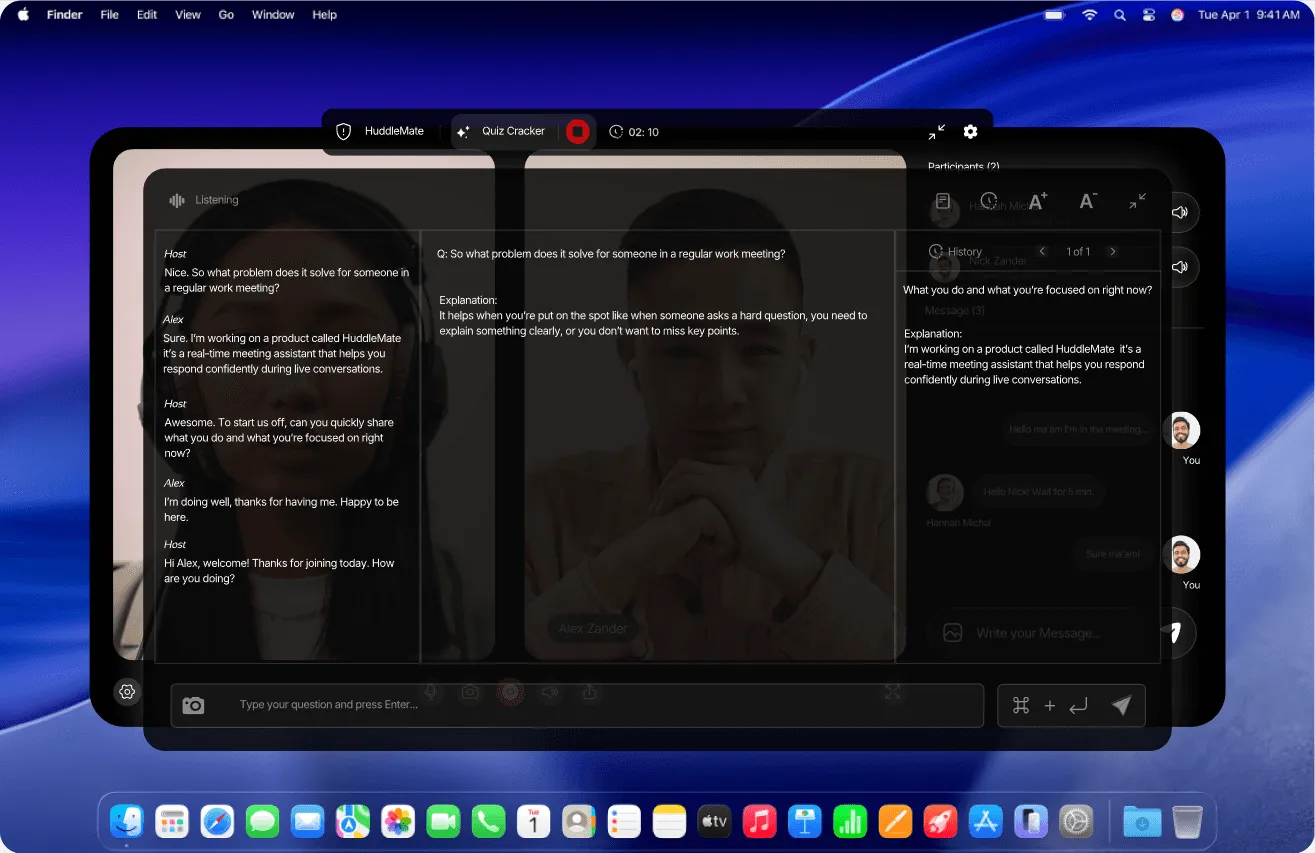
Enterprise teams use Soniox to automatically transcribe meetings, webinars, and conferences. The multi-speaker detection and language identification features produce clean, accurate transcripts that can be searched, analyzed, or shared. Real-time captioning is also supported for accessibility.
Call Center Analytics and Quality Assurance
Contact centers leverage Soniox to transcribe customer calls in real time, enabling sentiment analysis, compliance monitoring, and agent coaching. The platform’s accuracy with domain-specific terms and alphanumerics (e.g., order IDs, policy numbers) is particularly valuable.
Medical Dictation and Healthcare Documentation
Healthcare providers use Soniox for voice-driven clinical documentation. The HIPAA-compliant infrastructure and high accuracy for medical terminology reduce administrative burden and improve documentation speed.
Pricing & Value
Soniox offers usage-based pricing for its API, with separate rates for speech-to-text, text-to-speech, and translation. The company provides a free tier for initial testing and development, followed by pay-as-you-go pricing that scales with volume. Enterprise customers can negotiate custom packages with dedicated support and data residency options.
Compared to competitors like OpenAI, Google, Azure, Deepgram, and AssemblyAI, Soniox positions itself as a cost-effective alternative for multilingual use cases. The unified API reduces integration complexity, and the platform’s focus on accuracy for non-English languages provides strong value for global products. However, pricing details are not fully transparent on the website, requiring potential customers to contact sales for enterprise quotes.
Final Verdict
Soniox is a compelling choice for developers and enterprises building multilingual voice products. Its strengths lie in real-time performance, broad language support, and accuracy for challenging speech scenarios like code-switching and alphanumerics. The platform’s compliance certifications and data residency options make it suitable for regulated industries.
Areas for improvement include more transparent pricing and additional documentation for advanced customization. The consumer app, while functional, may not compete with dedicated dictation or translation apps in terms of polish.
Overall, Soniox is well-suited for teams that need a single, reliable speech AI API for multiple languages and real-time use cases. Developers can explore the API documentation to evaluate integration complexity, and enterprises can compare Soniox against other providers to assess accuracy and latency benchmarks.
Pros & Cons
The Good
- Real-time streaming with sub-200ms latency enables live voice agents and interactive applications without noticeable delay.
- Native-speaker accuracy across 60+ languages, including code-switching and alphanumerics, outperforms English-first competitors.
- Unified API for speech-to-text, text-to-speech, and translation reduces integration complexity and vendor lock-in.
- Enterprise-grade compliance (SOC 2, ISO 27001, HIPAA, GDPR) with in-memory processing suits privacy-sensitive industries.
- Global data residency options allow in-region processing to meet local regulatory requirements without sacrificing model quality.
The Bad
- Pricing details are not fully transparent on the website, requiring potential customers to contact sales for enterprise quotes.
- The consumer app may lack the polish and feature depth of dedicated dictation or translation apps like Otter or Google Translate.
- Advanced customization options, such as custom vocabulary or domain adaptation, are not extensively documented for self-service users.